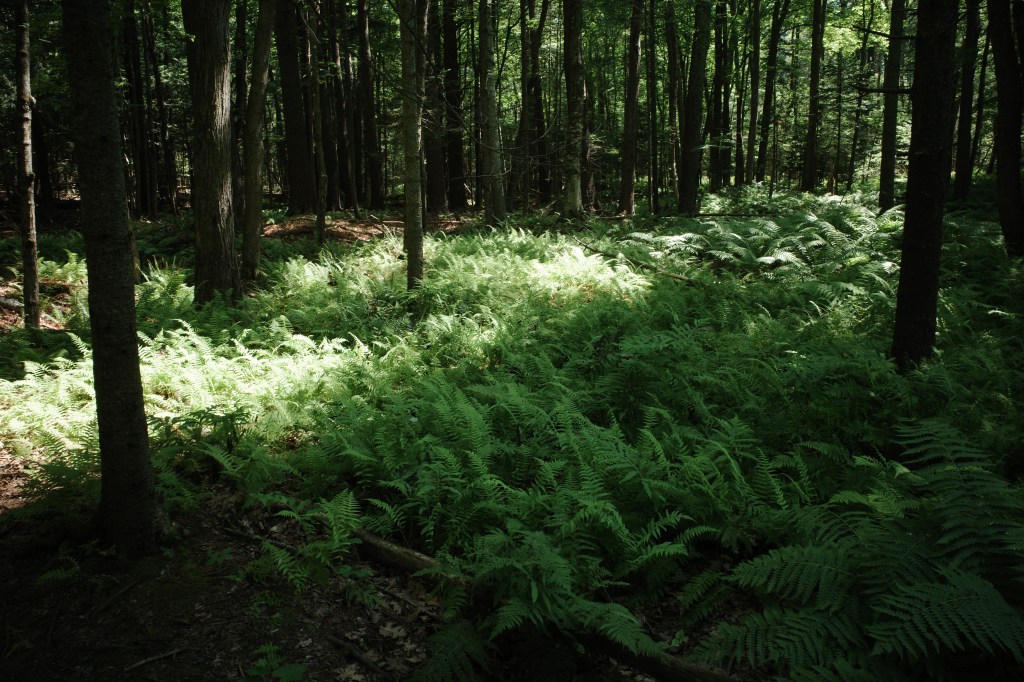
Happy New Year! I went for a walk on January 1st, inside a light bluster of snow. I take pictures in these woods all the time, and it’s always hard to create any kind of distinction in the mess of branches. It’s very satisfying when I can bring out volume and character, however.
In this snow, the greens, browns, grays, and whites formed their own ready blocks, especially in the picture above. But this rock may just be extremely clear, as itself. A photo of it from the summer remains a favorite for presence. It leaps into your thoughts.
Higgins Beach, Scarborough, Maine, February 23, 2025
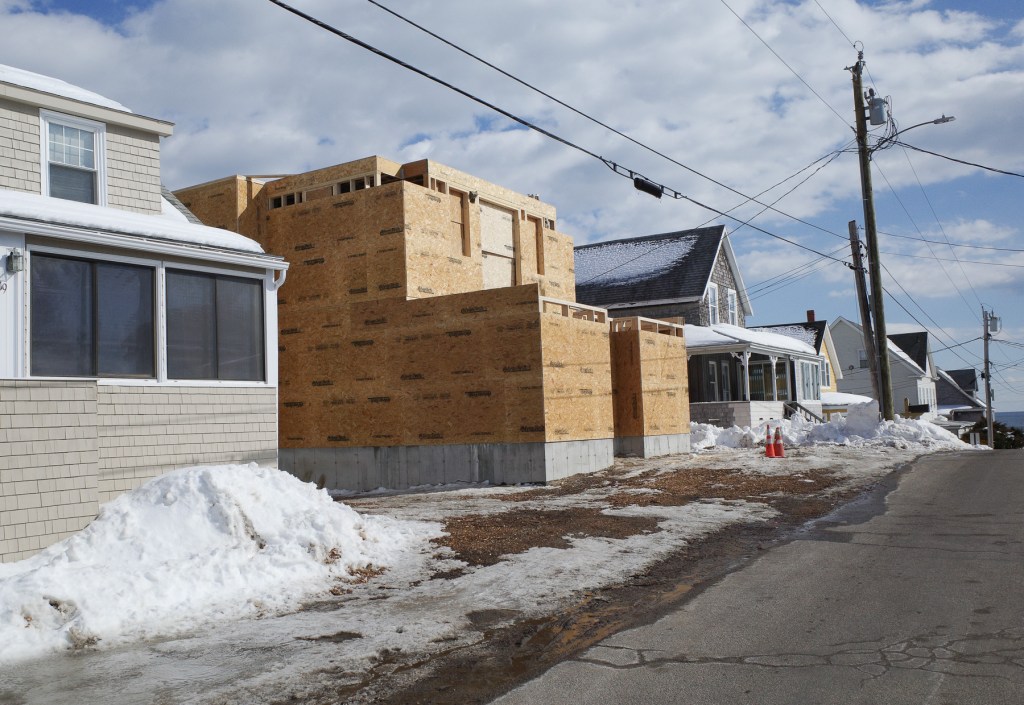
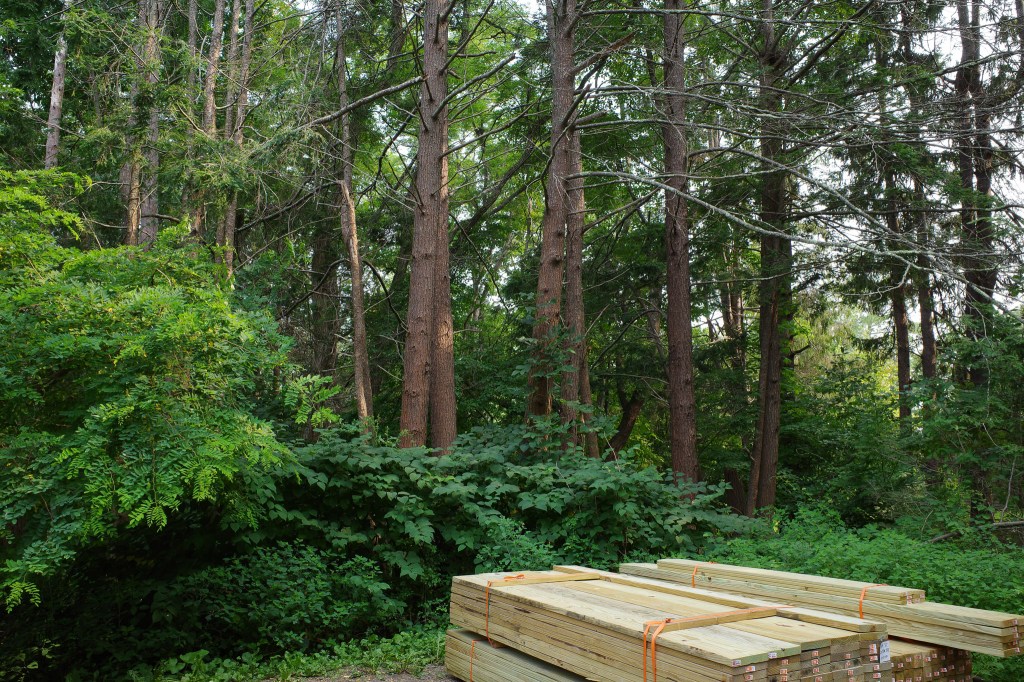
I’m drawn toward bare perspectives on road work, construction sites, and newly laid piles of the basic materials in our “built environment.” Things under construction are almost more visible than complete things. They are effectively in-motion, which attracts our eye more than what’s settled.
At the same time, there is a way to look at such things that enriches our senses, and there is a way that blunts them. Novelty is everywhere—it’s nearly a rule now. It’s easy to notice that the naked plywood of this house is different from what surrounds it. But novelty is not originality; in fact, novelty is a clichéd, intrusive tool in our time. We shouldn’t take each other captive with the use of surprise. We shouldn’t manipulate attention.
Where in the past I may have erased construction sites—orange cones, yellow bulldozers, exposed concrete—from my vision, for the last few years I’m usually drawn to these happenings, even find them beautiful. The reality is that this is how everything (modern) we know is constructed, and there is a freshness to feeling that reality, even if there is also a sense of loss.
In sound, or in photos, tracing or creating the world as it emerges is a preoccupation I have. I’m deeply reverent about Merleau-Ponty’s essay on Cézanne, called “Cézanne’s Doubt.” He discusses this sensation of seeing appearances as they are at the beginning of the world—which for Merleau-Ponty’s phenomenology is a perceptual world, I suppose. But he also alludes to an actual, chronological beginning of the animal world. Cézanne’s work apparently shows this, and this is partially why there is such eerie “non-humanity” to his paintings. I relate to this non-humanity, and I feel anger about humans’ habit (a natural behavior) of focusing on each other. It’s a matter of seeing more broadly, including humans in the landscape rather than making them ideal protagonists.